In the ever-changing commercial landscape of the UAE, the foundation of a robust, resilient enterprise is not constructed solely on market entry strategy or allocation of capital, but on resilient architecture.
For investors as well as corporations setting up their presence in the dynamic region, the MoA or the Memorandum of Association is generally characterized as a simple administrative checkbox in the realm of licensing. In actuality, it caters as the constitutional backbone of your business structure or entity. It is the main governing document that actually defines the relationship of your company with the outside world, delineates liability, and most importantly, sets up the boundaries associated with operational reality.
Whether you aim to structure an LLC (Limited Liability Company) or a specialized entity in the Free Zone, an accurately-drafted MoA is the first defensive line against disputes amongst shareholders, regulatory non-compliance, and bottlenecks associated with operations.
What is the Memorandum of Association or MoA?
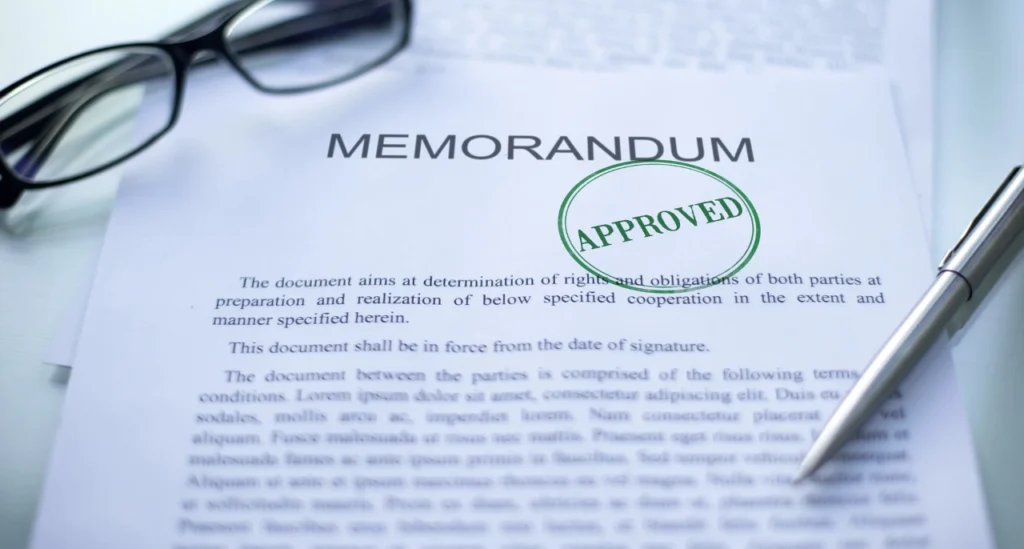
The MoA or the Memorandum of Association is defined as a statutory document that is needed during the process of company formation in the UAE. It acts as the representative of a binding agreement made between the shareholders, highlighting the primary, fundamental conditions upon which the incorporation of the company is done.
As opposed to internal bylaws, the Memorandum of Association is a public document that is registered with the relevant authorities, including the DED (Department of Economic Development) for entities set up in the UAE Mainland or the respective UAE Free Zone Authority. It signs to authoritative government bodies, fiscal institutions, and potential partners that your business entity is 100% legally valid and perfectly authorized to operate within certain parameters.
Why is the Memorandum of Association Vital for Governance?
For decision-makers, the MoA is not merely paperwork; it is a tactical instrument that:
- Defines Legal Personality: It sets up the company as a distinguished legal entity, separating all its debts as well as obligations from the personal assets to the shareholders.
- Ensures Operational Continuity: Fiscal institutions and banks strictly scrutinize the Memorandum of Association in order to determine who holds the signing authority. Any form of ambiguity here can result in frozen accounts or restricted/paralyzed operations.
- Protects Asset Liability: The crucial document explicitly limits shareholders’ liability to the extent of their respective share capital contribution, an important feature when it comes to risk management.
A Robust MoA’s Anatomy: Key Clauses
While general templates exist, depending on them for complicated ownership structures leads to major risk. A bespoke Memorandum of Association (MoA), crafted accurately via renowned, professional Document & Attestation services, should comprehensive encapsulate the following components:
- The Name & Legal Status
The clause is mandated to state the approved business or trade name as well as the legal form (such as LLC, CJSC, etc.). This is not only cosmetic, i.e., the name is required to comply with strict naming conventions in addition to dictating the brand protection along with the market perception of the brand.
- The Object Clause (Commercial/Business Activities)
This particular section defines the entire scope of the company’s allowed activities. As per the law of the United Arab Emirates, a company cannot directly engage in commercial actions outside of its MoA’s scope without risking regulatory fines and penalties.
Strategic Note: When indulging in Business Planning, make sure that the clause is broad enough to permit future vertical integration but specific enough to align with the licensing requirements of the DED.
- Capital Structure and Ownership
This section of the MoA highlights the authorized amount of share capital, shares’ division, and the percentage of ownership that every shareholder has. With recent shifts in the regulations offering complete foreign ownership in the majority of sectors, this clause serves as the definitive equity record, rendering the historical “UAE or Local Sponsor” side agreements fully obsolete in many cases.
- Management & Authority
Perhaps the most vital section when it comes to daily efficiency, this MoA clause appoints the Manager in addition to defining their authoritative powers – specifically related to signing checks, entering contracts, and hiring employees or staff members.
- Profit & Loss Distribution
While generally mirroring shareholding percentages, the UAE law permits profit distribution ratios that are different from ownership stakes, given that this is fully and explicitly agreed upon in the Memorandum of Association. This flexibility is very important for partnerships where only a single party contributes capital and the other contributes operational expertise.
- Disposition of Shares and Exit Strategy
A comprehensive Memorandum of Association includes provisions regarding share transferring. It clearly details the procedure if a shareholder wants to exit or if their shares are to be transferred to the chosen heirs – a vital consideration for Family Office Setup as well as long-term succession planning.
Jurisdictional Nuances: UAE Mainland vs Free Zones
The drafting & legalization procedure varies majorly, all depending on the selected jurisdiction.
UAE Mainland Entities
- Governing Law: Strictly abide by the UAE Commercial Companies Law.
- Language: Compulsory to be drafted in the Arabic Language. A bilingual (English and Arabic) format is deemed the standard, but the Arabic version prevails in the courts of the UAE.
- Notarization: The document is required to be signed in a UAE Public Notary’s presence to be considered legally binding.
Free Zone Entities
- Regulatory Flexibility: Zones such as the ADGM or DIFC function as per the Common Law frameworks, providing different structural flexibilities as compared to civil law zones.
- Process: The Memorandum of Association is generally signed before the Free Zone Registrar as opposed to a public notary. Although some Free Zones offer generic templates, complicated holding structures generally need customized amendments to make sure they mesh with the specific regulations of the Free Zone.
Memorandum of Association vs. Articles of Association (AoA)
It is important to differentiate between the two crucial foundational documents, although they are generally executed simultaneously.
| Feature | Memorandum of Association (MoA) | Articles of Association (AoA) |
| Main Focus | External relations & constitution. | Rules of internal management. |
| Key Content | Objective, Capital, Identity, Liability. | Voting Rights, Protocols of Meetings, Director Powers. |
| Role | Sets up the company’s existence. | Governs how the entity is run/operated. |
The Complete Lifecycle of a Memorandum of Association

- Drafting & Notarization
The procedure starts with accurate drafting to make sure there is no conflict with the law of the United Arab Emirates. For companies situated on the Mainland, this gets followed by legal translation and notarization. In certain cases, Government Liaison services are needed for the purpose of expediting this phase and ensuring that the notary accepts custom clauses’ specific wording.
- Attestation
For corporate shareholders who are based outside of the United Arab Emirates, the documents of the parent company might require attestation by the MOFA (Ministry of Foreign Affairs) to get accepted as legal and binding for the new Memorandum of Association.
- Amendments & Restructuring
Business is dynamic. Whether your company is undergoing complete corporate restructuring, elevating the amount of capital, or adding new partners, the Memorandum of Association must necessarily be mandated in order to reflect reality. Operating with clauses that are outdated can cause numerous compliance risks. Amendments usually need a special resolution approved and passed by shareholders, followed by the exact same notarization and registration procedure as the initial incorporation.
Conclusion
The Memorandum of Association is deemed the DNA of your business entity in the United Arab Emirates. It dictates your liability, operational freedom, as well as long-term stability.
Xpert Advisory ensures your corporate foundation is as solid and robust as your business vision and ambition. Right from accurate legal drafting to smooth government liaison for notarization, we manage the complicated processes associated with governance so that you can focus solely on your entity’s growth.
Ready to structure your UAE business for long-term success, get in touch with Xpert Advisory today and consult with our dedicated team of experienced professionals regarding your company formation and governance needs!
Frequently Asked Questions (FAQs)
Q. Is an MoA compulsory for all companies in the UAE?
A. Yes, the Memorandum of Association is compulsory for the majority of business structures, including LLCs (Limited Liability Company) and partnerships, across both the UAE Mainland as well as Free Zone jurisdictions. It is a prerequisite for getting an official trade license and a corporate bank account.
Q. Can the MoA get amended after company formation?
A. Yes, a Memorandum of Association is a living document. Amendments related to capital alterations, share transfers, or restructuring of the management can be done through a special resolution, after which notarization and re-registration with the relevant authority takes place.
Q. What happens if a conflict between the Arabic and the English text in a UAE Mainland MoA?
A. For companies set up in the UAE Mainland, the Memorandum of Association must be bilingual. However, in case of a legal dispute or discrepancy, the text in Arabic legally prevails in the courts of the UAE.